
Why "sustainable" is no longer enough
Doing less harm was the old brief. Regulation, customers and cost now reward businesses that put value and materials back, and mid-sized firms are not only well placed to do it but are central to creating a more sustainable world.

For most of the last decade, "sustainable" meant a lower number. Less carbon, less plastic, less waste to landfill. Useful, and still worth doing. But a business that only shrinks its footprint is still running a model that takes materials in, sells them once and pays someone to take them away. The cost of that last step is rising, and it is now being priced deliberately.
Regenerative is the step beyond. The Ellen MacArthur Foundation sets out three principles for a circular economy: eliminate waste and pollution, circulate products and materials, and regenerate nature. Its framing of the third is blunt: the focus should no longer be simply on doing less harm, but on how we can actively improve the environment. For a mid-sized retailer, brand or distributor, that sounds lofty. In practice it translates into something quite operational. Products and packaging are designed so they come back. When they come back, they are resold, refurbished or recovered at the highest value you can get. And the business earns from the second and third life of what it sold, rather than writing it off.
The world is going the wrong way and is widening the gap
The Circularity Gap Report 2025, from Circle Economy with Deloitte, put the global circularity rate at 6.9%. The economy uses around 106 billion tonnes of materials a year, and the share that comes back from recycled sources has fallen since 2015 even as recycling has grown. Consumption is simply outrunning recovery.
But this gap is where the money and the opportunity sit. Every tonne that leaves your business as waste was bought, shipped, stored and handled at full cost. Most companies treat what comes back (returns, end-of-line stock, damaged goods, used packaging) as a cost centre to be minimised. Treat it as inventory with a recovery value and the conversation with finance changes.
Design is now driven by regulation, not intentions
The strongest commercial argument is that government has started charging for linear design and rewarding the alternative. Look at what went live in 2025 and 2026.
UK packaging extended producer responsibility (pEPR) sent its first notices of liability to large producers in October 2025. From Year 2, fees are modulated by recyclability. The illustrative Year 2 rates PackUK published in December 2025 put red-rated packaging at 1.2 times the base fee, rising to 1.6 times and then twice the base fee in the following two years. Green-rated packaging gets a discount funded by the red payers. Your packaging spec now shows up directly on your EPR bill.
In the EU, the Ecodesign for Sustainable Products Regulation bans large companies from destroying unsold apparel, clothing accessories and footwear from 19 July 2026, with medium-sized companies expected to follow in 2030. The European Commission's own figures suggest 4 to 9% of unsold textiles in Europe are destroyed each year.
Reporting has gone the other way, and that matters too. The EU's Omnibus deal narrowed the Corporate Sustainability Reporting Directive to companies with more than 1,000 employees and over €450 million turnover, and gave smaller firms in the value chain a cap on what they can be asked for. In the UK, the final UK Sustainability Reporting Standards were published in February 2026, for voluntary use until government or the FCA makes them mandatory. Some boards have read all this as permission to relax. I'd read it differently. The disclosure burden on mid-sized firms has eased, while the cost of waste and poor design has gone up. The incentive has moved from paperwork to operations, which is where mid-sized firms are strongest.
The commercial case is now better than most people generally assume
Regenerative work is often framed as a cost of doing business. The evidence for the revenue side is more encouraging than that. McKinsey and NielsenIQ studied around 600,000 US grocery and household products between 2017 and 2022 and found that products making ESG-related claims grew 28% cumulatively over five years, against 20% for those without, and accounted for 56% of all growth. The authors are careful to call this correlation rather than proof, and I'd treat it that way. It does undercut the assumption that customers won't pay for it.
Resale and repair have their own case. WRAP's 2025 work with Depop, eBay, Vestiaire Collective and others found that about four in five repaired garments, and about three in five second-hand items, replace a new purchase. That is the environmental benefit. It is also a customer who stays in your ecosystem, buying from you at a margin on goods you have already paid for once.
Mid-sized businesses have a real advantage here. You know your product ranges, you can change a packaging spec in one sourcing cycle rather than five, and the person who signs off a returns process is often two doors from the person who pays for it. Large groups have scale. You have speed and line of sight.
A mid-sized retailer was destroying returned items that were perfectly saleable because grading took too long. Setting up a simple grading step and a resale channel recovered a meaningful sum in the first year. Finance took it seriously once the recovered cash appeared as its own line in the monthly accounts.
But where to start?
Start with the flows you already pay for. Pull twelve months of returns, write-offs, end-of-line clearance and packaging fees into one view, with tonnage and value. Most firms have never seen these numbers side by side, and the total is usually bigger than anyone expected. Then pick the one flow with the highest recoverable value per unit and design a route for it, whether that means resale, refurbishment or a packaging redesign that moves a red rating to green. Make one person accountable for it, and give finance the recovery number every month.
What tends to go wrong is starting with a pledge and a logo. Start with a cash number, prove it on one product family, and the impact story writes itself from real data.
The opportunity is to stop treating waste and end-of-life products as unavoidable costs and start seeing them as sources of recoverable value. Get the economics right, build recovery into everyday operations, and the environmental benefits become part of how the business works, rather than something managed separately.
- Ellen MacArthur Foundation: Regenerate nature
- Recycling Magazine: Global circularity rate fell to 6.9% despite growing recycling
- GOV.UK: Year 2 illustrative waste disposal fees, extended producer responsibility for packaging
- Herbert Smith Freehills Kramer: UK Government issues final UK Sustainability Reporting Standards
- European Commission: New EU rules to stop the destruction of unsold clothes and shoes
- Morrison Foerster: EU Sustainability Omnibus I, what the final CSRD/CSDDD deal means for companies
- McKinsey: Consumers care about sustainability, and back it up with their wallets
- Just Style: WRAP report on resale and repair models
More from Second Tide.
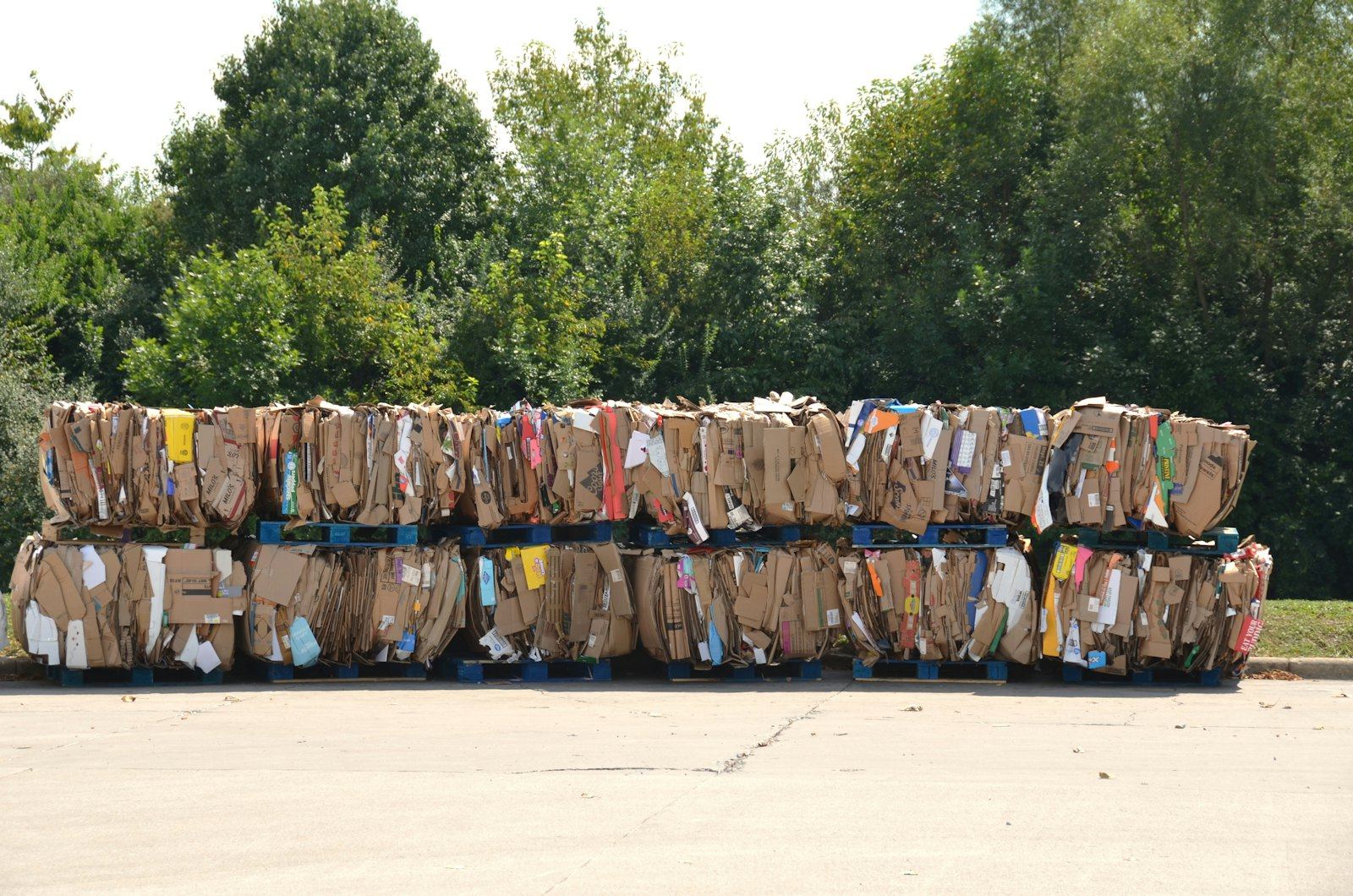
Packaging EPR: what it costs and how to cut it
UK packaging EPR is now a real invoice that rises with poor design. Here is how the fees work, what changes from Year 2, and where the savings are.
Read the article →
Resell, refurbish or recycle? Choosing the best route
Every returned or surplus item has a best next home. Picking it item by item, on recovery value and handling cost, is where the cash is.
Read the article →
Take-back schemes that pay for themselves
Most take-back schemes are run as marketing and lose money quietly. Built around recovery value, they can fund themselves. Five practical questions, answered.
Read the article →Follow us on LinkedIn.
Occasional insights from Second Tide. New articles, tools and what we are seeing across supply chains go on LinkedIn first.