

Profit and sustainability aren't trade-offs; they're design constraints
Treat carbon and waste the way you treat cost and service: as design principles and limits, set at the start and clearly priced in pounds.
There is a conversation that happens in a lot of boardrooms, and it follows a familiar script. Someone presents a sustainability initiative. Someone else asks what it costs. The room settles into a negotiation about how much margin the business is willing to give up to feel better about itself.
I think that framing is wrong, and increasingly it is expensive. Sustainability in a supply chain is not a moral surcharge on top of the real business. Just like a delivery promise or a cost ceiling, it is also a set of constraints that a good design must satisfy. And over the last two years several of those constraints have acquired a price tag that lands directly in the profit and loss account.
The cost is already in the numbers
Packaging is the clearest case. Under the UK's extended producer responsibility scheme, producers received their first invoices in October 2025. Letsrecycle reported in March 2026 that producers had been invoiced £1.46 billion for the first year against £1.523 billion required, with the government covering the shortfall, and that the recovery target for year two is £1.56 billion.
The way those fees are calculated matters more than the total. They are charged by weight and material, and from the second year they are modulated by recyclability. Packaging Insights reported that red-rated packaging pays 1.2 times the amber base rate, with green attracting a discount. Grocery Gazette reported in May 2026 that glass, around 5% of the packaging market, was expected to pay about 27% of EPR fees because the charge follows weight, and that plastic packaging charges were due to rise 15%.
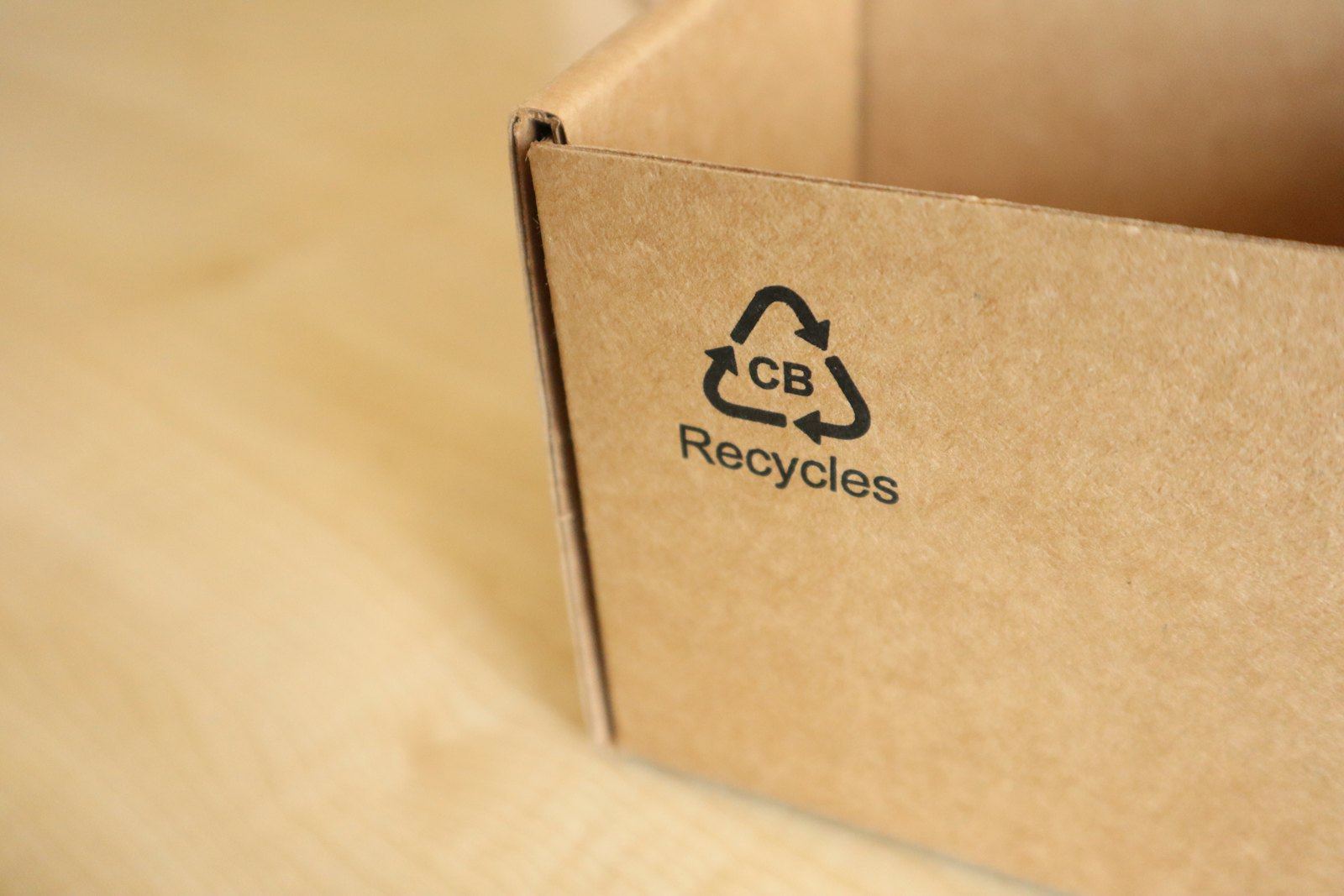
So a packaging specification is now a pricing decision. A heavier format, a laminate that can't be recycled, a secondary pack nobody needs: each of these has a cost per tonne attached, recalculated every year. That is not a trade-off between profit and sustainability anymore. It is one number driven by your operations and reported in your financial statements.
And if this wasn't enough to turn heads, the same logic is arriving elsewhere. The UK carbon border adjustment mechanism comes into force on 1 January 2027 for imports of aluminium, cement, fertilisers, hydrogen, iron and steel. KPMG notes the first payment falls due by 31 May 2028, and that construction and infrastructure will feel it indirectly through what they buy. And large public buyers have written carbon into how they choose suppliers. NHS England's supplier roadmap applies a minimum 10% weighting for net zero and social value in its procurements and already requires carbon reduction plans for new contracts.
Why the trade-off framing persists
Part of the reason is that sustainability work is often bolted on late. A product is designed, a network is built, a supplier is chosen, and then someone is asked to make it greener. At that point every improvement does cost money, because you are retrofitting.
The other reason is that the benefits land in different budgets. Lighter packaging saves fees in finance, freight in logistics and material in procurement. If no single owner sees all three, the business case looks thin to each of them.
When you set the constraint at the start, the economics usually change. Material reduction is cost reduction. Fewer empty miles is lower fuel spend, and Logistics UK reported diesel up 36% in the year to April 2026. Recovering and refurbishing returned stock is margin you were previously writing off. None of this is novel. It simply requires that carbon and waste sit in the same model as cost and service, from the first draft.
Where it genuinely costs money
I don't want to oversell this. Some sustainability choices do cost more, at least for a period. Recycled polymer can carry a premium. A cleaner freight mode can be slower. Switching suppliers to cut embedded carbon means transition risk and dual running.
Those are real costs and boards should see them plainly. But they should be weighed against the costs of not changing, which are now easier to quantify: escalating EPR fees, CBAM charges on imported steel and aluminium, and contracts lost because a carbon plan wasn't credible. The better question for a board is which design meets all of its constraints at the lowest total cost. "How much margin will this cost us?" assumes the answer before the work is done.
There is also some evidence on the revenue side, though I'd treat it with care. McKinsey and NielsenIQ analysed around 600,000 consumer products between 2017 and mid-2022 and found that products making ESG-related claims grew 28% cumulatively over five years, against 20% for those without. The authors are clear that this is correlation, not proof of cause. I would not build a business case on it. I would use it to stop anyone assuming the commercial effect must be negative.
A food business we recently worked with was paying to ship part-empty pallets because the outer case was sized for an old product range. Redesigning the case to fit the pallet put about a fifth more product on every lorry. Fewer lorries meant lower freight cost and lower emissions from the same decision, and the payback was under six months. In the last few months we have seen similar opportunities in other sectors, including a medical products company and a micro irrigation supplier, both shipping packaged consumer goods.
What I'd ask a board to do
Put carbon and waste into the same model as cost and service, with a pound value attached wherever regulation already provides one. EPR fee rates and CBAM exposure are the obvious starting points.
Give one person ownership of the combined number, rather than splitting it across sustainability, procurement and operations.
And review the biggest design decisions of the next year, whether a packaging range, a network change or a supplier switch, against all the constraints at once. Most businesses find the cheapest option and the greener option are closer together than the boardroom conversation assumed. Where they aren't, at least the trade-off is now explicit and owned.
Our free Sustainability Regulation Readiness Check gives a first view of which of these rules touch your business and when.
- Letsrecycle: PackUK confirms shortfall as £63m, announces year 2 recovery target
- Packaging Insights: UK pEPR: Industry reacts to stricter PackUK Year 2 Illustrative Fees
- Grocery Gazette: Grocery firms warn packaging levy will keep food prices under pressure
- KPMG: Finance Bill: Carbon Border Adjustment Mechanism (CBAM)
- NHS England: NHS Net Zero Supplier Roadmap (June 2026)
- Logistics UK: Rising logistics costs risk fuelling inflationary pressures, warns Logistics UK
- McKinsey and NielsenIQ: Consumers care about sustainability, and back it up with their wallets
More from Waterfront Ventures.

What mid-sized businesses need that big consultancies don't give them
Common questions from owners, investors and finance directors of mid-sized firms about outside help, answered plainly.
Read the article →
The case for an asset-light supply chain partner
Owning sheds and trucks used to signal control. For many mid-sized businesses it now mostly means carrying fixed cost into volatile years.
Read the article →
Values in practice: what Tata taught us about building a business
Tata's public record shows values working as operating rules, not wall posters. Here is what we have taken from it, and what we haven't.
Read the article →Follow us on LinkedIn.
Occasional insights from Waterfront Ventures. New articles, tools and what we are seeing across supply chains go on LinkedIn first.